
The idea that niacinamide and vitamin C cannot coexist comes from older studies using high temperature and free ascorbic acid. In practice, with the right pH and the right vitamin C derivative, a combined formula is both stable and comfortable.
Choose the derivative, not the myth
Free ascorbic acid needs pH below 3.5 to penetrate, which is where niacinamide can convert to nicotinic acid and cause flushing. Swap to sodium ascorbyl phosphate or 3-O-ethyl ascorbic acid, formulate at pH 5.0–5.5, and the interaction largely disappears.
Watch the colour
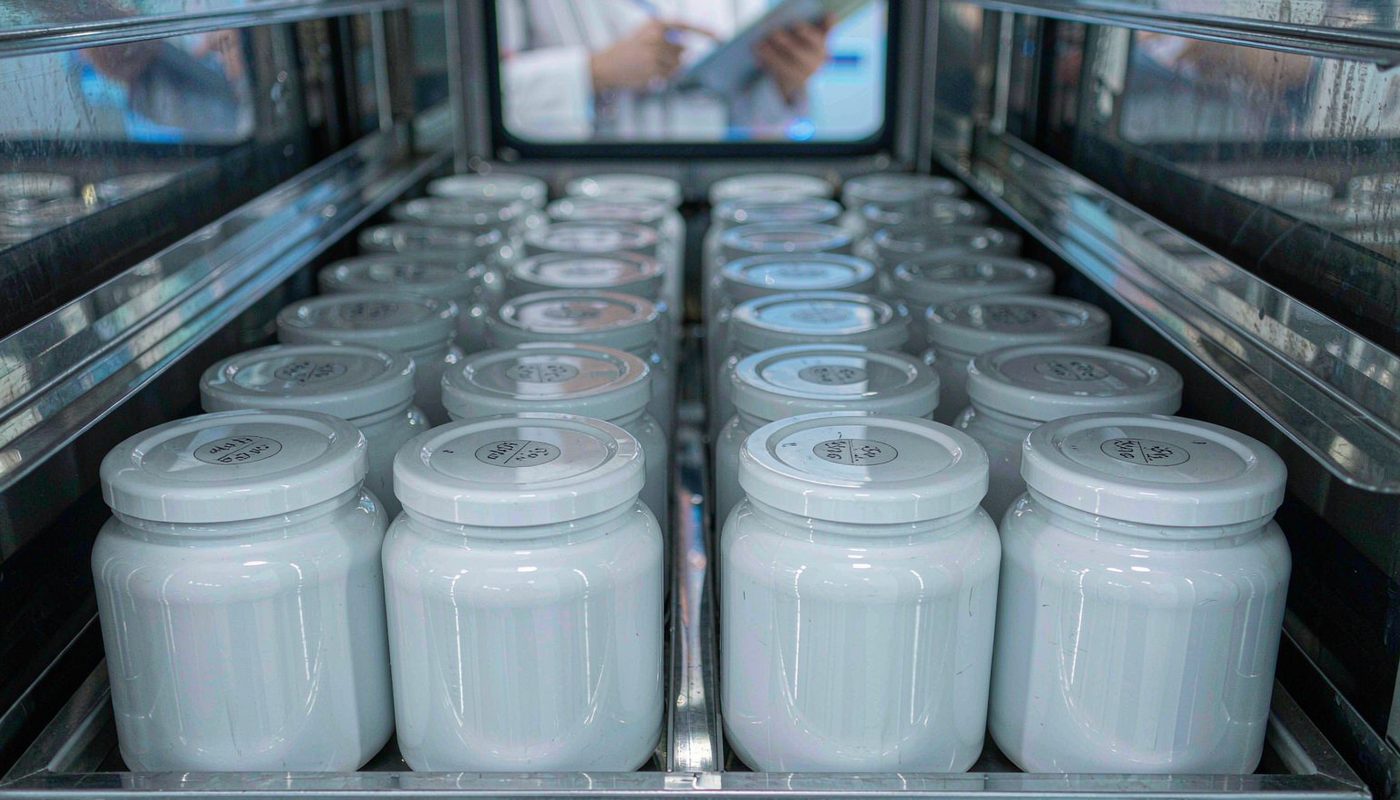
The most common failure is not efficacy but colour drift. Chelate the system, use an opaque or amber pack, and run a 12-week 45°C stability test before you commit to clear glass.
Our standard approach
5% niacinamide, 2% ethyl ascorbic acid, pH 5.3, chelated with phytic acid, packed in airless. It has passed 12 weeks at 45°C with no measurable colour change.